
The $21.8 Billion Opportunity
Every year, millions of overseas Nigerians look for reliable ways to buy a house in Nigeria from the diaspora to build generational wealth or secure a retirement home. With annual diaspora remittances hitting an incredible $21.8 billion, a massive portion of foreign currency is shifting away from family consumption directly into premium real estate assets.
Yet, despite the massive financial potential of the Nigerian property market, the fear of losing money to dishonest developers or close relatives keeps many brilliant investors on the sidelines.
The Reality of Diaspora Real Estate Risks
You have likely heard the heartbreaking horror stories that create this hesitation:
- The Unverified Family Delegate: An overseas professional sends thousands in foreign currency to a trusted cousin or sibling, only to discover the funds were mismanaged.
- The Ghost Site: Arriving at Murtala Muhammed International Airport in Lagos or Nnamdi Azikiwe International Airport in Abuja, taking a drive to the project site, and finding nothing but an empty, overgrown plot of land.
- Property Ownership Disputes: Showing up to inspect a project only to find a completely different family living in the property due to title fraud.
💡 The 2026 Strategy
In 2026, you do not have to let fear keep you from building wealth back home. The secret to a completely secure property acquisition is replacing blind emotional trust with strict institutional, financial, and legal structures. By implementing a professional checklist, you can safely navigate the market and secure a premium property from anywhere in the world.

1. Eliminate the “Cousin Risk” by Building an Independent Team
The most common mistake overseas buyers make is relying on a single relative to act as their project manager, agent, and inspector. To safely buy a house in Nigeria from the diaspora, your first step is eliminating this “Cousin Risk” by hiring an independent team of licensed professionals with zero family ties.
Essential Team Members
- The Independent Real Estate Attorney
- Role: Never rely on the seller’s or developer’s lawyer. Hire an independent attorney registered with the Nigerian Bar Association.
- Responsibility: Conducts land registry searches, verifies title ownership, checks for hidden disputes, and drafts contracts like the Deed of Assignment.
- The Licensed Surveyor
- Role: Prevents double-selling schemes and land acquisition traps.
- Responsibility: Visits the site with a GPS device to map exact coordinates, cross-referencing them with state master plans to ensure the land is clear of government acquisition.
💡 The Reality Check While a family member can easily mismanage funds or misrepresent construction progress, a team of licensed professionals cannot cross-check and defraud you without risking criminal prosecution and the loss of their professional licenses.
More Nigeria Diaspora Guides
- Top 5 Safe Real Estate Investment Hubs in Nigeria: 2026 Guide
- How to Securely Verify Land Titles in Nigeria from Abroad
- Diaspora NHF Mortgage Loan: What Nigerians Abroad Should Know
- How to Safely Buy a House in Nigeria from Abroad
- BVN and NIN for Nigerians in the Diaspora: How to Register and Update Your Details
2. Master the “Big Three” Property Titles to Prevent Fraud
To completely avoid real estate scams in Nigeria, you must understand the legal documents that validate property ownership. Never transfer funds until your independent attorney runs a digital search and verifies the baseline “root of title.”
How Digital Title Searches Work
Thanks to massive infrastructural updates across Nigeria, remote title verification is faster and more reliable than ever:
- Lagos State: Your lawyer can run an instant digital search using the e-GIS lookup via the official Lagos State Lands Bureau Portal.
- Abuja (FCT): Searches are verified through the Abuja Geographic Information Systems (AGIS) Portal.
| Property Title | What It Is | Why It Matters |
| Certificate of Occupancy (C of O) | The gold standard document issued directly by the State Government, granting a 99-year statutory leasehold to the named owner. | It provides the highest level of property security because the government officially recognizes the root of title. |
| Governor’s Consent | Official approval required whenever a property with an existing C of O is resold to a new buyer or developer. | Without this signature, subsequent sales are legally invalid—even if the original seller holds a valid C of O. |
| Approved Survey Plan | The official legal document mapping out the precise boundary coordinates and dimensions of the land. | Ensures the property does not overlap with public infrastructure projects, military zones, or government reserves. |
💡 Pro Tip for Diaspora Buyers
Always demand the survey plan coordinates first. Your independent surveyor can plot these coordinates against state master plans before you commit to any deposit or contract.
3. Route All Funds Safely via Modern Diaspora Banking Channels
When you are ready to make a financial commitment, the rule is absolute: zero cash payments and zero transfers to personal bank accounts. Every single kobo must move through a digital, legally traceable financial channel.
Core Banking Strategies for Overseas Buyers
- Utilize Non-Resident Nigerian Investment Accounts (NRNIA)
- How It Works: Opened under Central Bank of Nigeria frameworks, these specialized, foreign-currency-compliant accounts let you transfer funds directly from abroad into secure local investment channels.
- Why It Matters: Highly regulated and monitored, NRNIA accounts create an ironclad, audit-ready digital paper trail admissible in court during disputes.
- Pay via Direct Corporate Escrow or Vetted Developer Accounts
- How It Works: Payments should only go directly to the verified corporate bank account of a thoroughly vetted real estate firm or into a legally binding escrow account managed by your lawyer.
- Why It Matters: Eliminates the risk of individual diversion or untraceable personal account transfers.
Enforce Staged Milestone Payments
If you are buying off-plan or during active construction, never release your entire capital upfront. Align your payout schedule strictly to physical site progress:
| Construction Phase | Payment Trigger | Verification Required |
| Stage 1: Foundation | Initial Deposit Release | Independent surveyor confirms ground layout and excavation quality. |
| Stage 2: Superstructure & Roofing | Mid-Term Tranche | Lawyer and engineer inspect concrete framing and roof installation. |
| Stage 3: Finishing & Handover | Final Balance | Full site sign-off, photo proof, and physical keys handed over. |
💡 The Capital Golden Rule
Funds must only be released when your independent team visits the site, takes photo/video evidence, and certifies that specific structural milestones meet standard build quality.
📚 Read More Related Guides
Want to explore this topic further? Here are more helpful guides for Nigerians in the diaspora covering property investment, mortgage loans, land verification, and essential Nigerian documentation.
4. Leverage the “Mortgage Hack” as an Institutional Shield
One of the most effective, underutilized strategies to safely buy a house in Nigeria from the diaspora is forcing a financial institution to do the heavy background checks for you.
Commercial banks and state-backed institutions like the Federal Mortgage Bank of Nigeria (FMBN) offer structured diaspora mortgage products tailored for overseas residents. These programs allow you to secure long-term financing using verified foreign income statements and credit scores.
Why the “Mortgage Hack” Prevents Fraud
Even if you have the full cash amount available and intend to pay outright, apply for a diaspora mortgage first.
- Institutional Due Diligence: Banks have zero tolerance for real estate fraud, flawed titles, or unverified developers.
- Legal & Risk Dissection: Their internal legal and compliance teams will thoroughly audit the Certificate of Occupancy, verify the Governor’s Consent, and inspect the developer’s historical track record before approving a single Naira.
- The Ultimate Walk-Away Signal: If a major Nigerian commercial bank reviews an estate and refuses to finance it, consider it an immediate red flag and walk away from the deal instantly.
5. Enforce Remote Technical Verification and Live Site Audits
In an era dominated by high-end Instagram promotional videos, edited TikTok clips, and synthetic 3D renderings, you should never buy property based on marketing materials alone. Always demand live, unedited, real-time technical validation.
Key Remote Inspection Strategies
- Live Interactive Video Walkthroughs
- Action: Have a member of your independent professional team or a third-party inspection service schedule a live video call (via WhatsApp, Zoom, or FaceTime) tailored to your time zone.
- Focus: Skip the pre-packaged model homes. Direct them to walk through your exact unit, inspecting tile alignment, plumbing fixtures, electrical points, and immediate road access.
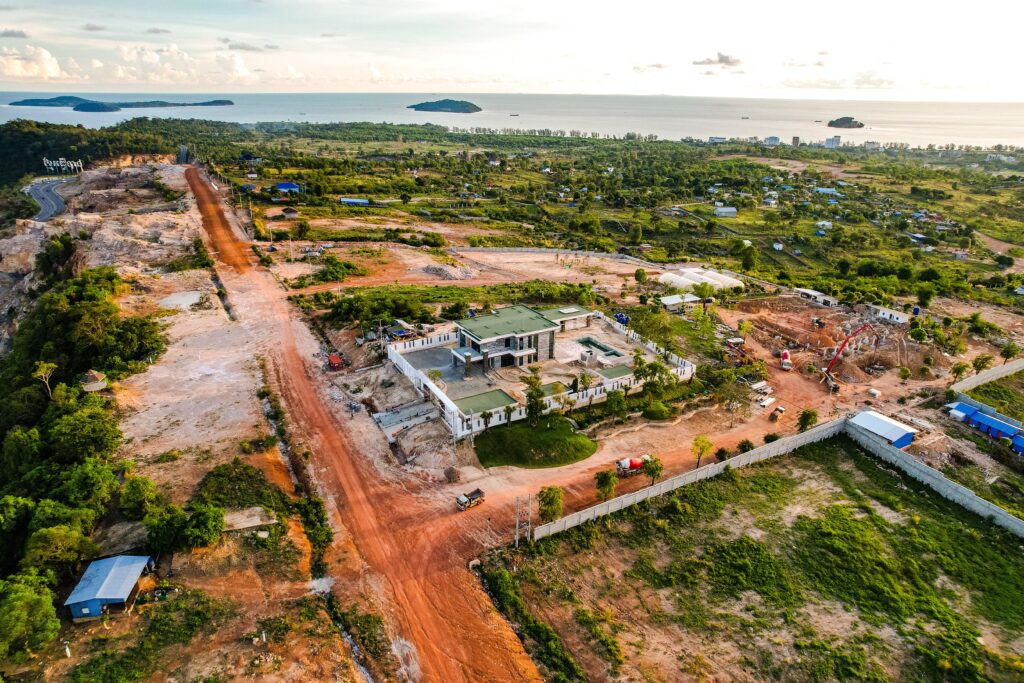
- Independent Drone Aerial Mapping
- Action: Hire an independent drone operator to fly over the specific plot coordinates for larger land acquisitions or master-planned communities.
- Focus: Aerial footage reveals real neighborhood progress—confirming whether the developer is actually laying drainage systems, installing power infrastructure, and building access roads.
| Verification Method | Primary Objective | Key Risk Mitigated |
| Live Video Audit | Inspect interior finishings & exact unit condition. | Misrepresentation of actual unit progress or build quality. |
| Drone Coordinate Flight | Verify surrounding infrastructure & neighborhood layout. | Buying cleared land in an inaccessible, undeveloped location. |
💡 Inspection Rule
Never accept pre-recorded video tours. Real-time footage ensures you are viewing current site conditions rather than outdated footage from earlier project phases.
6. The Definitive Comparison: Off-Plan Properties vs. Existing Builds
Choosing between a property under construction (off-plan) and a finished, move-in-ready home requires balancing financial flexibility against structural risk.
| Key Investment Feature | Off-Plan Property (Under Construction) | Existing Build (Move-In Ready) |
| Financial Advantage | Lower entry price with flexible installment plans spread across 12 to 24 months. | Immediate possession or instant rental income generation. |
| Capital Outlay | Phased payments aligned with construction progress. | Requires an immediate, full upfront capital outlay or rapid mortgage finalization. |
| Primary Risk Factor | Exposure to developer delays, project abandonment, or materials inflation. | Risk of hidden structural wear, foundational cracking, or legacy ownership disputes. |
| Essential Safeguard | Audit the developer’s track record; physically inspect at least two past completed estates. | Hire an independent structural engineer to run a complete integrity and moisture report before closing. |
Conclusion: Building Wealth with Confidence in 2026
Acquiring real estate in Nigeria from abroad remains one of the most powerful wealth-building strategies for the diaspora. Key economic hubs like Lagos, Abuja, and Port Harcourt continue to expand, offering substantial long-term capital appreciation and high-yield rental returns.
However, this market rewards disciplined strategy and heavily punishes blind emotional trust. By treating your purchase as a structured business transaction—building an independent professional team, utilizing digital state land registries, and routing funds through regulated banking channels—you can expand your property portfolio back home with complete confidence and peace of mind.
❓ Frequently Asked Questions (FAQ)

Q: Can I legally complete a property purchase in Nigeria without flying down?
A: Yes. You can execute a Power of Attorney (POA) giving your independent legal structure or a trusted representative the authority to sign physical documents on your behalf. Ensure the POA is registered and stamped at the land registry to be fully binding.
Q: How do I handle government taxes and registration fees from abroad?
A: These are typically calculated as a percentage of the property value (such as Governor’s Consent fees, registration fees, and stamp duties). Your independent attorney will calculate these costs and you should pay them directly to the designated State Government revenue account, ensuring you receive a digital receipt.
Q: What happens if a developer defaults on an off-plan build timeline?
A: This is why your initial contract must include a Deed of Agreement with a clear refund or penalty clause. If they exceed the grace period without a valid legal excuse, the contract should dictate a step-by-step financial penalty or a full capital refund process.
Still Have Questions?
Find answers to more common questions about investing, living, working, and navigating life between Nigeria and the diaspora.
.
💬 Drop a Comment Below!
We want to hear from you!
- Have you ever tried buying a home in Nigeria from abroad?
- What is your biggest fear or greatest success story when dealing with property back home?
Share your thoughts, questions, or experiences in the comments section below! Our team and legal partners reply to comments weekly to help point you in the right direction
📬 Never Miss an Update – Subscribe to Our Newsletter!
Don’t navigate the Nigerian real estate market in the dark. Join thousands of diaspora investors receiving actionable, fraud-free property guides directly in their inbox.
Subscribe today to get:
- Monthly Title Alerts: Changes to digital land registration in major cities.
- Vetted Market Reports: Honest reviews of new off-plan estates.
- Investment Blueprints: Strategies to maximize rental yields from abroad.